Lightning Water: Recreating Lightning to Produce Chemical-Free Water for Sustainable Agriculture
Best Companies to Watch in 2026
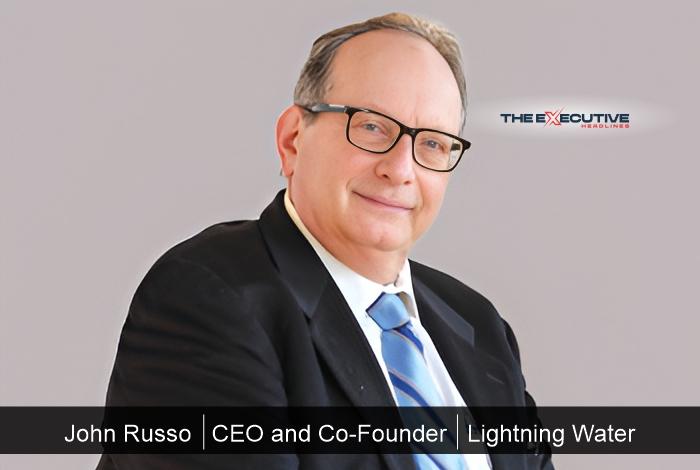
There comes a point when progress begins to feel heavy, when the very methods meant to feed the world start leaving the soil tired and the future uncertain, and in that tension between need and consequence, a deeper question begins to surface about what kind of growth truly serves life.
For John Russo, that question carried weight. He looked at a scientific breakthrough that had lived safely inside laboratories for years, admired yet untouched by the realities of farms and food systems, and saw something far more human within it. He saw a chance to follow instinct, to chase an idea that felt less like invention and more like remembering something the earth had always known.
Lightning Water was born from that instinct. Its foundation rests on a simple, almost poetic truth. When lightning meets rain, the water changes. It becomes plasma activated water, a form that quietly supports life in ways science is still learning to understand. Nature has carried out this process for ages, asking for nothing in return.
The ambition here carries a rare kind of sincerity. To take that fleeting moment in the sky and shape it into something people can use every day demands both courage and care. For John, this became more than a venture. It became a personal measure of purpose, a way to contribute to a world that feels cleaner, kinder, and more balanced.
Lightning Water stands as a reflection of that belief, where science listens to nature instead of trying to outpace it, and where innovation begins to feel like a return to something deeply familiar, almost like a quiet miracle waiting to be understood.
How the System Works
At the heart of Lightning Water is a process many people assume is complex or engineered from scratch. In reality, it draws directly from what already happens in nature, only now it is being controlled and made usable at scale. John’s focus here is not on invention, but on replication with precision.
The system works exclusively with the ambient atmosphere. The air we breathe is primarily nitrogen, not oxygen. The ratio is roughly 80% nitrogen to 20% oxygen.
They start with standard water, H₂O. Nothing is added.
What they are doing is replicating a natural process that has existed for millions of years. When lightning strikes rainwater in the atmosphere, it changes the atomic structure of both the water and the surrounding air. That interaction creates reactive nitrogen species and reactive oxygen species.
In simple terms, they are taking the outermost electron in these atoms and displacing it. This allows nitrogen to form nitrates and nitrites, which are the foundation of natural fertilizer. At the same time, oxygen is converted into hydrogen peroxide, which is a highly effective natural disinfectant.
This disinfectant is capable of eliminating viruses, bacteria, and foodborne pathogens such as listeria, E. coli, and salmonella. In controlled lab testing, they have achieved disinfection rates as high as an eight-log reduction.
These elements are then introduced to plants through both the root system and the leaf surface. Applied as a mist, the solution is absorbed through the leaves while also feeding the roots.
This creates a dual effect. The plant is being nourished and protected at the same time.
This is not a new invention. It is a natural process that has always existed. The difference is that it is now controlled and repeatable.
Seed Treatment and Germination
Seed treatment is often overlooked, treated as a routine step rather than a critical turning point in crop success. John’s work reframes this stage as one where small interventions can create measurable shifts in outcomes.
When seeds are treated with plasma air or Plasma Activated Water (Lightning Water), several things occur.
The seed is sanitized. Any bacteria or contaminants are eliminated.
At the same time, a change occurs on the outer shell of the seed. This allows for better penetration and more efficient germination.
They have seen germination rates increase from typical levels of around 80% to 90–95% in both lab and real-world testing.
These are measurable results.
Business Model and Intent
In a space where new technologies often become inaccessible or priced out of reach, the way a solution is distributed matters as much as the solution itself. John positions the model in a way that prioritizes reach over control.
The business model is based on licensing the technology and equipment directly to end users.
This includes farms, indoor growers, and vertical growing operations, both hydroponic and soil-based.
The goal is to make this as accessible and affordable as possible.
This is not being approached as a purely profit-driven model. The intention is to share a technology that provides an alternative to chemical-based growing methods, supports sustainability, and results in cleaner products.
The objective is simple. More options. Better outcomes. A system that benefits both the grower and the end user.
Challenges and Scale
Any shift in agriculture, especially one that questions long-standing chemical practices, comes with resistance. John does not avoid that reality. He acknowledges that adoption is as much psychological as it is technical.
There are challenges in introducing something new, especially when it is not widely understood.
This requires a shift not only in process, but in mindset.
The goal is to move beyond niche adoption and scale this into something widely available, including at the household level.
This is not limited to large agriculture. It applies to crops, plants, flowers, and general plant care.
The challenges are real, but so is the opportunity. With clear results and consistent application, adoption follows.
Founder Perspective
Behind the science sits a pattern in John’s career. He has worked in spaces where new ideas often meet skepticism, and that history shapes how he approaches Lightning Water today.
His background in media and technology gives him the ability to approach this with confidence.
In previous ventures, he built businesses by creating new categories, new methods, and new ways of thinking about existing systems.
That same approach applies here.
This is about introducing something that has not been widely implemented and bringing it into practical use.
The objective is to give people more control, more options, and better outcomes.
Forward Vision
The larger conversation around food is shifting, moving from abundance to uncertainty. John places Lightning Water within that shift, not as a fix-all, but as part of a broader change in how people think about access and control.
This is an opportunity to make a real impact.
The long-term goal is to make Lightning Water accessible to a broad audience and to support a shift toward more localized and self-directed food production.
Current systems do not provide long-term certainty around sustainability or availability.
There is value in giving people the ability to grow their own food and take control of their own supply.
This is not just beneficial. At some point, it becomes necessary.
Business News
Tyson Foods Shakes Up Its Beef Business: These Major Plant Closures Could Change Everything
From Army Veteran to Award-Winning Entrepreneur: Danielle King’s Inspiring Rise to Success
Amazon Business Hits $60 Billion, How Agentic AI Is Revolutionizing B2B Procurement
How Community Bank Delaware’s $1,000 Donation Is Strengthening the Future of Lewes Firefighters
Autodesk Just Launched a Game-Changing Program Every Small Business Should Know About