The Great Shift: Vulnerability Management vs. Exposure Management (And Why You Need Both)
If you ask ten security professionals to define their biggest operational headache, nine will likely say "patching." For decades, the industry has operated under a simple, albeit exhausting, mandate: find the vulnerabilities (CVEs) and fix them. We call this Vulnerability Management (VM).
But recently, a new term has taken over the boardroom and the analyst reports: Exposure Management (EM), often formalized as Continuous Threat Exposure Management (CTEM).
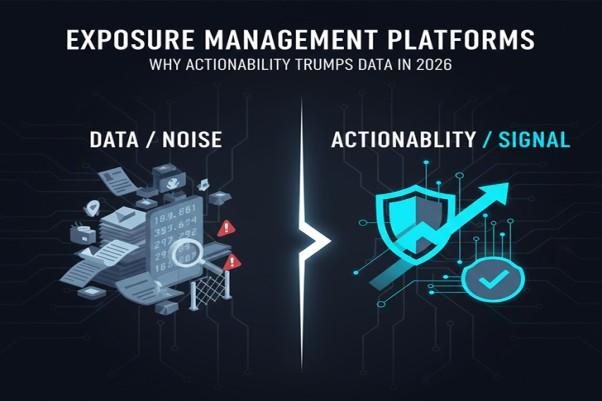
Is this just a rebranding exercise? A new buzzword for the same old scanner? The answer is a definitive no. The shift from VM to EM represents a fundamental change in how we measure, prioritize, and mitigate risk. While VM is about maintaining a list of software defects, EM is about understanding the exploitability of your entire attack surface.
Here is the breakdown of why the industry is moving on from legacy VM, and how exposure management platforms like Spektion are bridging the gap.
Vulnerability Management is a "List" Mentality
Traditional Vulnerability Management is rooted in compliance. Its primary artifact is the scanner report. Tools like Tenable Nessus or Qualys scan your network, compare file versions against a database of known Common Vulnerabilities and Exposures (CVEs), and generate a list.
The logic of VM is binary:
- Is the software version vulnerable? Yes.
- Is there a patch? Yes.
- Action: Apply patch.
The Problem with VM
The VM model worked when networks were static and release cycles were slow. Today, it is failing because of volume and context.
- The Numbers Game: In 2024 alone, over 40,000 new CVEs were reported, a year-over-year growth of 25%. No team can patch everything.
- Lack of Context: VM tools prioritize based on CVSS scores (severity). But a CVSS 9.8 vulnerability on a server that is air-gapped and has the vulnerable service disabled is lower risk than a CVSS 5.0 vulnerability on an internet-facing web server that is actively processing customer data. VM tools struggle to see this distinction because they rely on static metadata, not operational reality.
Exposure Management and The "Map" Mentality
Exposure Management flips the script. Instead of asking "Is this software vulnerable?", it asks "Can this asset be compromised?"
EM (and the CTEM framework) broadens the scope beyond just software bugs (CVEs). It includes:
- Misconfigurations (e.g., an open S3 bucket).
- Identity Risks (e.g., a service account with Domain Admin privileges).
- Shadow IT (e.g., an unauthorized remote access tool).
- Attack Paths (e.g., how an attacker moves from a low-level workstation to a critical database).
The goal of EM is not to fix every flaw, but to break the most dangerous attack paths. It prioritizes based on exploitability and business impact rather than theoretical severity.
Export to Sheets
Runtime Intelligence is exposure management
While Exposure Management is the superior strategy, it has a fatal flaw in implementation: Data Quality.
Most organizations try to build an EM program using data from their old VM scanners. They try to map attack paths using static snapshots. This leads to "Garbage In, Garbage Out." You cannot calculate the "blast radius" of an attack if you don't know what the software is actually doing at that moment.
This is where Spektion differentiates itself. It is not just another scanner; it is a Runtime Intelligence platform.
Spektion provides the "ground truth" required for a successful Exposure Management program by monitoring software execution.
- Validation: VM assumes a vulnerability is active if the file is present. Spektion validates it by checking if the vulnerable code is loaded into memory and executing. If it isn't running, it isn't an immediate exposure.
- Discovery: EM requires seeing the whole picture. Spektion detects Shadow IT and "Vibe Coded" (AI-generated)apps the moment they execute, even if they live in unmanaged directories like C:\Users\Public, which traditional scanners miss.
- Prioritization: Spektion replaces the generic CVSS score with a Runtime Risk Score. It tells you, "This vulnerability matters because the application is currently talking to the internet and running as root."
Conclusion: Stop Counting, Start Managing
The transition from VM to EM is not optional. The attack surface is expanding too fast for the "scan-and-patch" method to keep up. Attackers are exploiting misconfigurations and identity weaknesses just as often as software bugs.
To survive, security leaders must move from a patch maintenance mindset (fixing lists of bugs) to a risk mindset (managing exposures).
-
Vulnerability Management is a task you perform.
-
Exposure Management is a strategy you execute.
-
Spektion is the tool that gives you the visibility to do it.
If you are tired of drowning in false positives and fighting fires, it is time to stop managing vulnerabilities and start managing exposure.
Business News
How Automation Is Reshaping the Modern Workplace
Best Buy Reports Strong Q3 2026: Revenue Up, Outlook Raised Amid Tech-Upgrade Demand
Wall Street Slumps as AI Stocks and Global Markets Slide
Atlantic City Prepares for a Premier Business Gathering
Eric Prydz Accuses Former Business Manager of Financial Misconduct